
Getting air conditioning right at the design stage saves time, avoids rework, and protects margins. For builders delivering new homes in the Hills District, Specifying Air Conditioning for New Builds in Castle Hill means coordinating load calculations, compliance, space planning, and commissioning from day one.
This guide explains what to decide, what to document, and what to check on site so Specifying Air Conditioning for New Builds in Castle Hill is predictable, compliant, and easy to hand over.
What should builders decide first when specifying air conditioning?
They should decide the system type and performance target before the DA-to-CDC documentation is locked in. In practice, specifying air conditioning Castle Hill homes starts with whether the project needs ducted, multi-split, or a mix, and what “comfort” means for that client’s lifestyle.
Builders should also clarify budget, zoning expectations, noise limits, and any future-proofing requirements such as solar integration or battery-ready controls. Clear early decisions reduce variations later.
How should heating and cooling loads be calculated for Castle Hill homes?
They should insist on room-by-room heat load and heat loss calculations, not rules of thumb. When Specifying Air Conditioning for New Builds in Castle Hill, loads must reflect glazing area, orientation, shading, insulation, airtightness, ceiling heights, and occupancy.
Castle Hill homes often include large open-plan living zones and substantial glazing, which can spike cooling demand. A documented calculation supports correct equipment selection, avoids oversizing, and provides defensible procurement specs.
Which system type suits a typical new build: ducted, split, or multi-split?
Ducted suits whole-home comfort, cleaner aesthetics, and zoning, but needs ceiling space and careful duct design. For many detached homes, Specifying Air Conditioning for New Builds in Castle Hill often lands on ducted reverse-cycle due to resale expectations and client preferences.
Splits and multi-splits can suit tighter budgets, staged builds, or homes with limited roof voids. Builders should balance capital cost, running cost, maintenance access, and the client’s expectations for uniform temperatures.
What duct design details should be included in the specification?
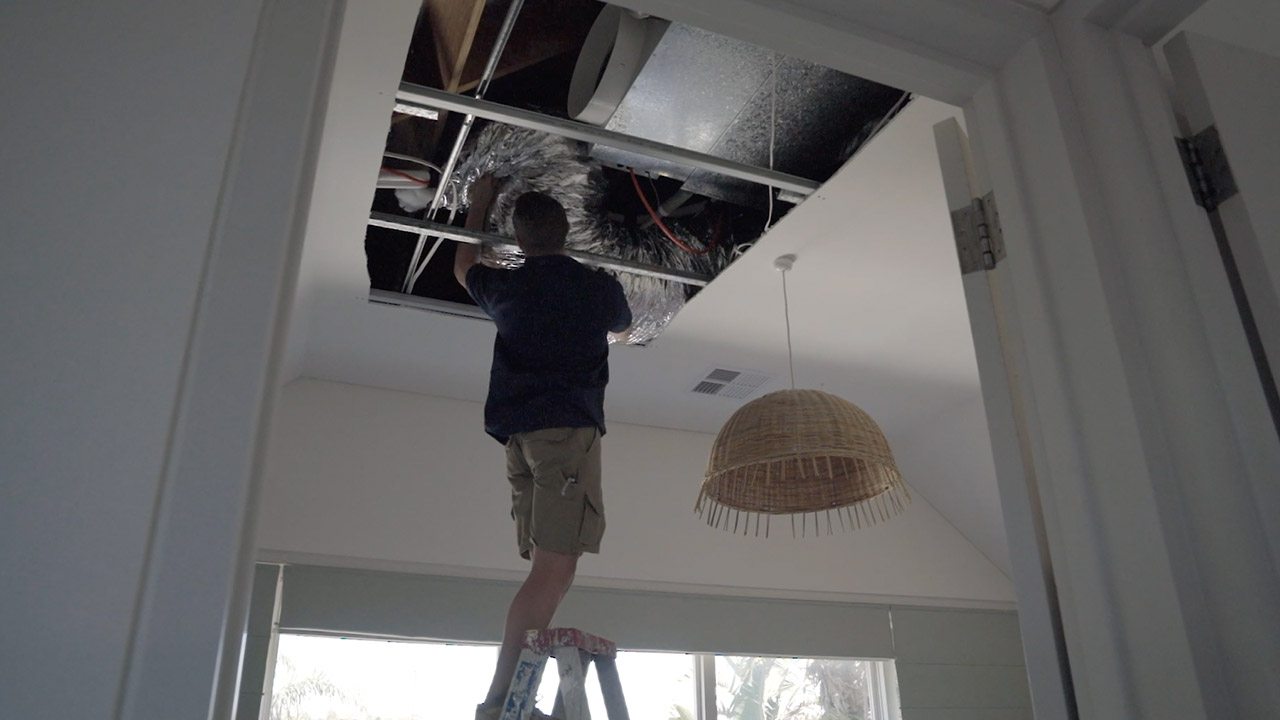
They should specify duct layout, sizes, insulation, airflow targets, diffuser types, return air pathways, and static pressure allowances. A common failure in Specifying Air Conditioning for New Builds in Castle Hill is leaving duct design “to installer discretion”, which can lead to noisy systems, weak airflow, or poor zoning.
They should document duct insulation rating, flex-duct limits, sealing requirements, and balancing expectations. Diffuser placement must avoid short-circuiting supply to return and should consider downlights and bulkheads.
Where should outdoor units, condensers, and plant be located?
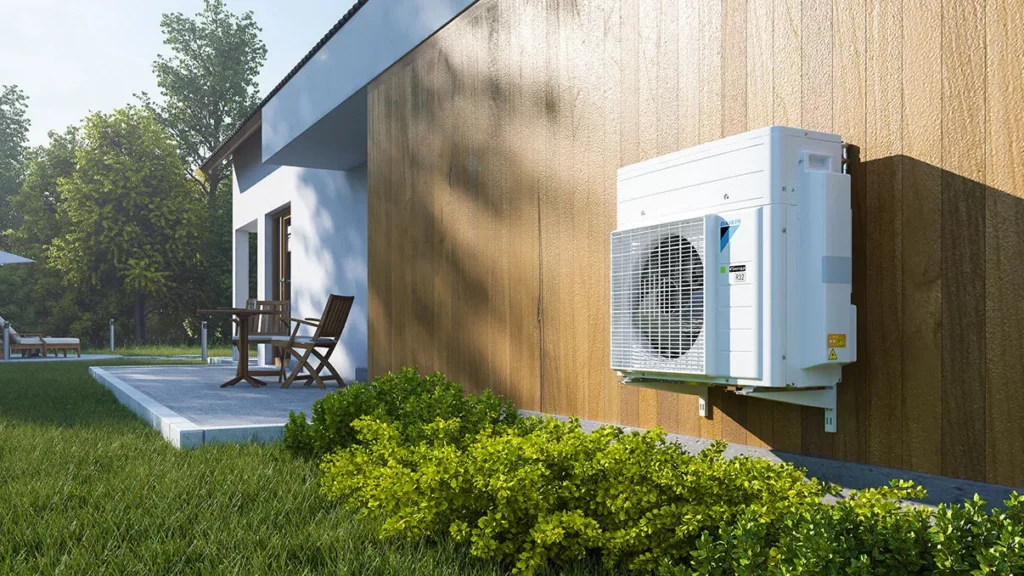
They should be placed for service access, airflow clearance, and neighbour-friendly noise outcomes. When Specifying Air Conditioning for New Builds in Castle Hill, builders should coordinate condenser locations with landscaping, fencing, and setbacks, and keep them away from bedroom windows where practical.
They should also plan condenser mounts, vibration isolation, and drainage. Poor placement often triggers late-stage redesign when external cladding, paving, or screens are already installed.
How can builders coordinate air conditioning with framing, services, and finishes?
They should coordinate early with structural framing, electrical, plumbing, and lighting so penetrations and routes are known. In Specifying Air Conditioning for New Builds in Castle Hill, clashes commonly occur around beams, trusses, bulkheads, and wet-area exhausts.
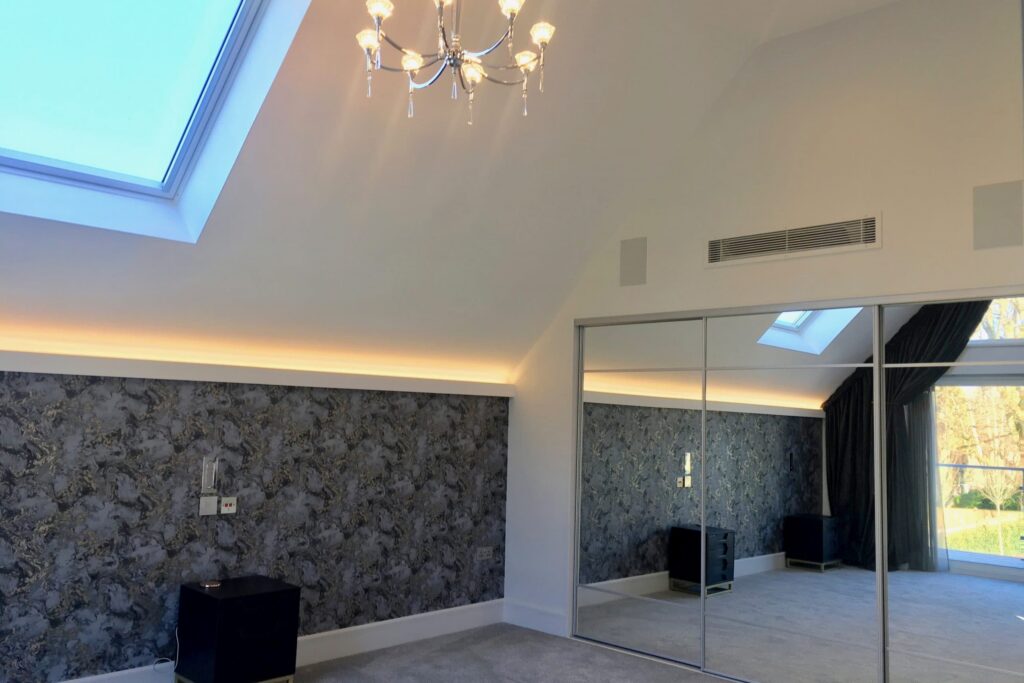
Builders should confirm roof void access panels, condensate fall, and safe service walkways if required. They should also confirm where thermostats, zone controllers, and return grilles sit relative to cabinetry, curtains, and feature walls.
What electrical and controls requirements should be documented?
They should document dedicated circuits, isolation switches, control wiring routes, and any smart home integrations. For Specifying Air Conditioning for New Builds in Castle Hill, the electrical scope should clearly state who supplies and installs isolators, interconnects, and control cabling, not just power points.
They should also specify control locations and user interface types. If the home includes PV, they should consider demand management features, timers, and Wi-Fi modules, and ensure client expectations are realistic.
What compliance and standards should builders check in NSW?
They should confirm the system supports the project’s NCC energy efficiency pathway and any BASIX requirements, and that installation practices align with applicable Australian Standards and manufacturer instructions. In Specifying Air Conditioning for New Builds in Castle Hill, compliance is as much about documentation as it is about equipment.
Builders should keep records of model numbers, rated capacities, and commissioning results for handover. They should also ensure penetrations are properly sealed to maintain fire, acoustic, and weather performance where applicable.
How should builders specify ventilation, filtration, and indoor air quality?
They should confirm the home’s ventilation strategy and avoid assuming the air conditioner “handles fresh air”. When Specifying Air Conditioning for New Builds in Castle Hill, builders should align kitchen and bathroom extract, make-up air pathways, and any whole-home ventilation systems with the HVAC design.
They should also specify filter grade and maintenance access, especially for ducted returns. Where clients have allergies, they can include upgraded filtration, but only if the system can handle the added pressure drop.
What should commissioning, testing, and handover include?
They should require commissioning that proves airflow, zoning, and temperature control work as designed. A strong Specifying Air Conditioning for New Builds in Castle Hill package includes balancing, thermostat calibration, condensate checks, and verification of noise and vibration controls.
Handover should include user guides, warranty paperwork, maintenance schedule, and an as-built layout showing duct routes, zone settings, and isolator locations. This reduces callbacks and protects the builder’s reputation.
What common mistakes cause delays and variations on new builds?
They commonly arise from late selections, missing ceiling space allowances, unclear scopes, and undocumented performance assumptions. In Specifying Air Conditioning for New Builds in Castle Hill, the most expensive mistakes often include undersized returns, poor diffuser placement, and no planned condensate drainage.
Builders should also watch for coordination gaps with plastering and painting. If bulkheads and access panels are not agreed early, the installer may cut finished surfaces, triggering defects and disputes.
What should be included in a practical procurement and supplier brief?
They should include load calculations, zoning schedule, duct drawings, equipment schedule, electrical scope, and commissioning requirements. For consistent results in Specifying Air Conditioning for New Builds in Castle Hill, builders should request apples-to-apples quotes with clear inclusions and exclusions.
They should also ask suppliers to confirm lead times, warranty terms, and who manages defects. A structured brief reduces quote ambiguity and helps procurement lock in the right contractor at the right time.
How should builders approach maintenance access and long-term serviceability?
They should design for safe access to filters, indoor units, condensate drains, and outdoor units without removing finished elements. When Specifying Air Conditioning for New Builds in Castle Hill, serviceability should be treated like any other lifecycle consideration, not an afterthought.
Builders should specify access panels where needed and avoid boxing-in key components. A maintainable system performs better, lasts longer, and generates fewer post-handover complaints.
What is the simplest checklist builders can use on site?
They should use a short checklist tied to rough-in, pre-plaster, pre-handover, and final commissioning. For Specifying Air Conditioning for New Builds in Castle Hill, the essentials are confirming clear duct runs, correct penetrations, sealed joins, safe condensate falls, correct unit locations, labelled circuits, and tested zoning.
They should also confirm the as-built documentation is complete before practical completion. That final step is often what separates a smooth handover from months of minor issues.
More to read: Does Every New Residential Build in Baulkham Hills Need Ducted Air Conditioning?

0 Comments