

What quick signs suggest their system will struggle in summer?
If it takes longer to cool, blows weak air, or makes new rattling or buzzing sounds, it is often a warning. Another common sign is rooms cooling unevenly, especially in double-storey homes across the Hills.
They should also watch for musty smells, water near the indoor unit, and sudden spikes in power bills. For air conditioning Hills District homes, these are the cues to act before the first heatwave.
Have they checked and replaced their air filters recently?
Dirty filters are one of the most common reasons air conditioners underperform. They restrict airflow, reduce cooling, and can worsen allergies when windows stay shut.
They should check filters monthly in summer and clean or replace them as the manufacturer recommends. For many split systems, a rinse and dry is enough, but worn filters need replacement. This simple step often delivers the fastest improvement for hills district air con households.
Are their outdoor units clear of debris and able to breathe?
The outdoor unit needs space to expel heat. If plants, mulch, leaves, or stored items block airflow, the system can run hotter and less efficiently.
They should clear at least 300–600 mm around the unit and remove leaf litter from the coil fins carefully. After storms common around Sydney’s edges, a quick check helps. Many air conditioning Hills District properties have gardens close to units, so clearance matters more than people think.
Is their thermostat set up properly for comfort and cost?
Incorrect settings can make a good system feel poor. If the thermostat is in direct sun, near a hot kitchen, or in a draughty hallway, it can misread the temperature.
They should confirm the mode is set to “cool,” the fan is on “auto,” and schedules match when people are actually home. A realistic target for many Sydney homes is around 24–26°C, depending on insulation and humidity. Good control reduces run time for air conditioning Hills District systems.
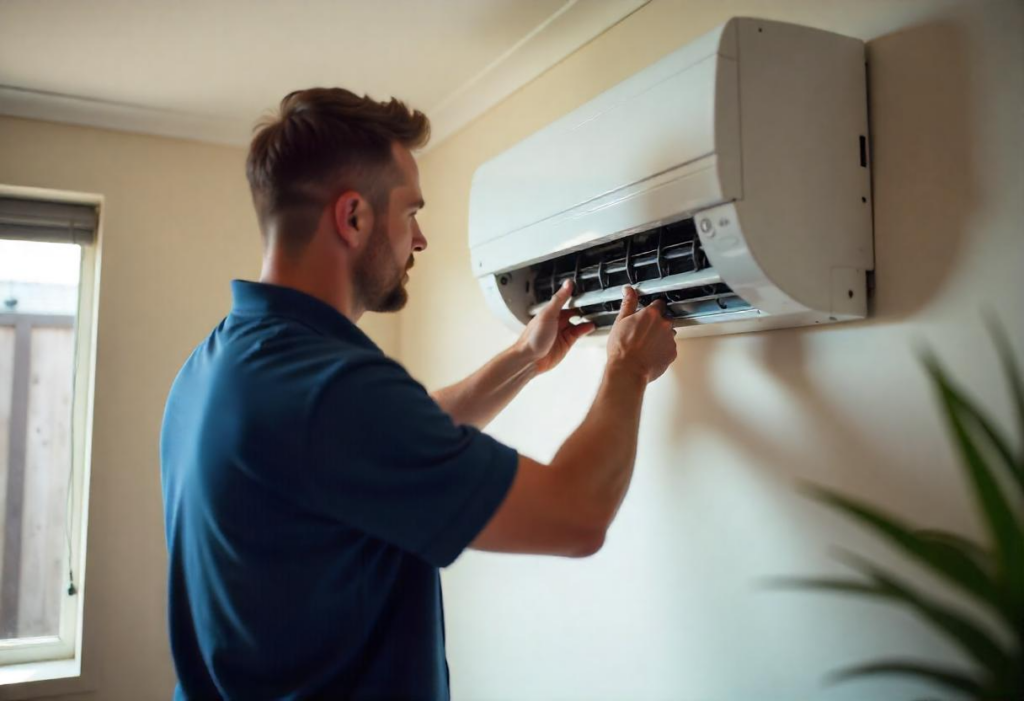
Could their home be losing cool air through gaps and poor sealing?
Air conditioning performance depends on the house as much as the unit. If cool air leaks out, the system has to run longer to keep up.
They should check door seals, window frames, and any obvious gaps around exhaust fans or older sliding doors. Thick curtains, blinds, and door snakes can help on the cheap. For air conditioning Hills District homeowners with afternoon sun on west-facing rooms, shading can be the difference between “fine” and “struggling.”
Have they tested airflow in every room and at every vent?
Uneven airflow is easy to miss until the hottest day arrives. They should run the system and check that each room gets steady airflow, not just the rooms closest to the indoor unit.
If a room is weak, the issue could be a blocked vent, a closed door, or duct leakage in ducted systems. For split systems, furniture placement can also redirect air poorly. Catching airflow issues early helps air conditioning Hills District homes avoid uncomfortable hotspots.
Are there any early warning noises, odours, or leaks they should not ignore?
New noises often indicate vibration, a loose bracket, or a fan issue. Musty odours can point to mould on coils or in the drain tray, which is common after humid periods.
They should also check for water dripping from indoor units or staining on walls. A blocked condensate drain can cause leaks and damage. For air conditioning Hills District households, dealing with small leaks early can prevent plaster repairs later.
Is their switchboard and safety switch setup ready for heavy summer use?
Air conditioners draw more power during long heat spells. If circuits are already busy with ovens, pool pumps, or EV chargers, nuisance trips can happen.
They should test their safety switches using the “T” button and check whether the air con is on a dedicated circuit. If fuses blow or breakers trip repeatedly, they should call a licensed electrician. Reliable power supply helps air conditioning Hills District families avoid sudden shutdowns during extreme heat.
When should they book a professional service before the rush?
If the system has not been serviced in over 12 months, a pre-summer check is smart. Servicing can include coil cleaning, electrical checks, drain inspection, and airflow testing.
They should book before November if possible, because trades often fill up once Sydney’s first hot week arrives. This is especially true for air conditioning Hills District suburbs where demand spikes across family homes and new estates at the same time.
Should they check refrigerant levels, or is that only for technicians?
Low refrigerant is not a DIY check, but the symptoms are worth knowing. If cooling is weak, the outdoor unit runs constantly, or the indoor coil freezes, it may indicate a refrigerant issue or airflow problem.
They should not top up refrigerant without finding the leak, and only licensed technicians can handle it in Australia. For air conditioning Hills District homeowners, the key is recognising symptoms early and arranging proper diagnosis.
Are their ducted systems due for zoning and duct checks?
Ducted air conditioning can waste energy if ducts leak into roof spaces or if zoning is poorly balanced. If some rooms are icy while others never cool, ducted air conditioning efficiency may be improved by checking the ductwork and adjusting the zoning.
They should check that zone motors respond correctly and that return air paths are not blocked. In many Hills homes, roof insulation and duct condition also affect performance. A duct review can significantly improve air conditioning Hills District comfort without replacing the whole system.
Do they need to clean indoor coils and drain lines, or is filter cleaning enough?
Filter cleaning helps, but coils and drains still collect dust and moisture over time. That mix can reduce efficiency and create smells.
They can lightly clean accessible surfaces, but deep coil cleaning and drain flushing is usually best handled during a service. If anyone in the home has asthma or allergies, hygiene matters even more. Cleaner internals support stronger performance for air conditioning Hills District systems through long summers.
Is their system the right size for their home, or has the home changed?
A unit that is too small will run constantly and still feel inadequate. A unit that is too large can short-cycle, causing humidity and comfort issues.
They should consider whether renovations, extra rooms, enclosed patios, or higher ceilings have changed the cooling load. Many Hills District homes have extensions or converted garages, which can throw sizing off. Correct air conditioner sizing is a long-term win for air conditioning Hills District households.
What simple habits help them reduce breakdown risk during heatwaves?
They should close blinds during peak sun, keep doors shut between cooled and uncooled zones, and avoid setting the thermostat extremely low. Running the system steadily can be easier on components than constantly switching it on and off.
They should also avoid blocking returns and keep outdoor units shaded without restricting airflow. These habits reduce stress on air conditioning Hills District equipment when temperatures stay high overnight.
What should they do now if they want a clear, low-stress plan?
They should start with filters, outdoor clearance, and a quick test of cooling, airflow, and drainage. If anything seems off, booking a service early is the safest move before summer demand peaks.
For Hills District air conditioning running costs, a little preparation now usually means fewer surprises later, better sleep during hot nights, and more predictable energy bills for homeowners.

FAQs (Frequently Asked Questions)
What are the early signs that an air conditioning system in the Hills District might struggle during summer?
Early warning signs include longer cooling times, weak airflow, new rattling or buzzing noises, uneven room cooling especially in double-storey homes, musty smells, water near indoor units, and sudden spikes in power bills. Recognizing these cues allows homeowners to act before peak heatwaves.
How important is checking and replacing air filters for air conditioning performance in Hills District homes?
Checking and replacing air filters regularly is crucial. Dirty filters restrict airflow, reduce cooling efficiency, and can worsen indoor allergies. It’s recommended to inspect filters monthly during summer and clean or replace them per manufacturer guidelines to maintain optimal system performance.
Why should outdoor air conditioning units in the Hills District be kept clear of debris?
Outdoor units need at least 300–600 mm clearance around them to expel heat efficiently. Debris like plants, mulch, leaves, or stored items can block airflow causing the system to run hotter and less efficiently. Regular clearing, especially after storms common around Sydney’s edges, helps maintain system health.
How can thermostat settings affect comfort and energy costs for air conditioning in Hills District homes?
Incorrect thermostat placement or settings can cause poor system performance. The thermostat should avoid direct sun, hot kitchens, or draughty areas. Setting the mode to ‘cool,’ fan to ‘auto,’ and scheduling operation when occupants are home—typically targeting 24–26°C depending on insulation and humidity—optimizes comfort and reduces energy use.
What role does home sealing play in the effectiveness of air conditioning systems in the Hills District?
Proper sealing prevents cool air from escaping through gaps around doors, windows, exhaust fans, or sliding doors. Poor sealing forces the system to run longer to maintain temperature. Using thick curtains, blinds, door snakes, and shading west-facing rooms can significantly improve cooling efficiency and comfort.
When should Hills District homeowners schedule professional air conditioning servicing to avoid summer delays?
If the system hasn’t been serviced in over 12 months, booking a pre-summer service before November is advisable. Servicing includes coil cleaning, electrical checks, drain inspections, and airflow testing. Early booking helps avoid peak-season delays common across family homes and new estates in the Hills District.
0 Comments